
How to organise a product launch
A product launch is not a party: it is a communication operation that has to generate visibility, contacts and content. The event is only the visible part. Here is how to design it so that it really serves your product.
Organising your event 5 min read Updated on

Who is your product launch aimed at?
The first mistake is trying to do everything in a single evening: win over the press, thank clients, motivate the sales team and create a buzz. Each audience has its own timings, expectations and attention span. A journalist will give you an hour on a Tuesday morning; a distributor comes in the evening if there is a business interest; an employee mainly wants to understand what the product changes for them.
| Audience | Recommended format | Length | Measurable goal |
|---|---|---|---|
| Press and influencers | Morning with a demonstration and interviews | 1.5 to 2 hours | Articles and posts |
| Clients and prospects | Evening with a reveal and hands-on time | 3 to 4 hours | Sales meetings booked |
| Distributors | Half-day presentation and training | Half a day | Orders, listings |
| General public | Activation in a busy location, stand | A day or more | Contacts collected, trials |
| Employees | Convention or seminar | Half a day | Buy-in, a well-mastered sales pitch |
If you need to reach several audiences, it is better to run two formats back to back on the same day in the same venue: a press morning, then a client evening. The set and the technical equipment only need to be installed once.
How do you choose the venue for a product launch?
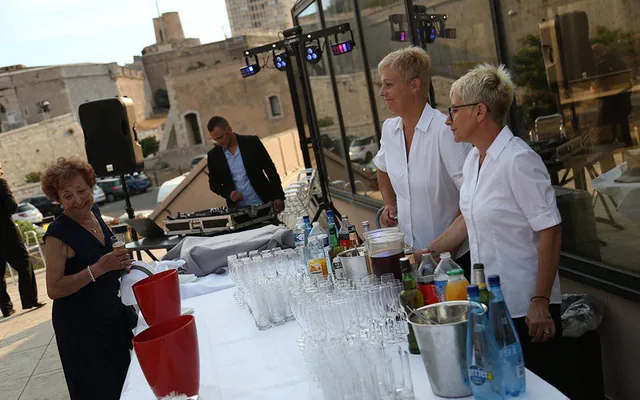
The venue should say something about the product. A tech product presents well in a contemporary space, a sea-related product naturally belongs on the seafront or aboard a boat in the Bay of Marseille, a craft product in a heritage venue. In Marseille, the La Joliette and Euroméditerranée district, close to Saint-Charles station, makes it easy for guests from elsewhere to attend. Above all, check whether natural light can be blocked out if you are planning a projection or a lighting effect.
How do you stage the product reveal?
The reveal is the moment that will be filmed, photographed and shared. It deserves real staging, short and rehearsed. A few principles:
- Build anticipation: the product hidden under a sheet, in a box, behind a screen, or simply kept out of the room until the signal.
- Cut the sound and dim the lights a few seconds before: silence grabs attention better than a speech.
- Reveal with an effect: entrance music, beams of light, cold sparks, a video on screen.
- Follow up with proof: a live demonstration, a user testimonial, key figures on screen.
- Open up hands-on time: guests touch, test and ask the teams their questions.
How do you invite guests and make sure they turn up?
A launch without an audience loses all meaning. For the press, send a simple invitation three weeks ahead, follow up by phone a week before and offer a one-to-one interview slot: that is often what persuades a journalist to come. For clients and distributors, the invitation should say what they will see first, without giving everything away, and what they will gain: hands-on time, a launch offer, a conversation with the designers.
- A personalised invitation, with the time of the reveal clearly stated.
- Online registration to know your numbers and collect contacts upfront.
- A reminder the day before, with directions and parking.
- Reasonable overbooking: in the evening, some of those registered do not turn up.
How do you keep the launch alive after the event?
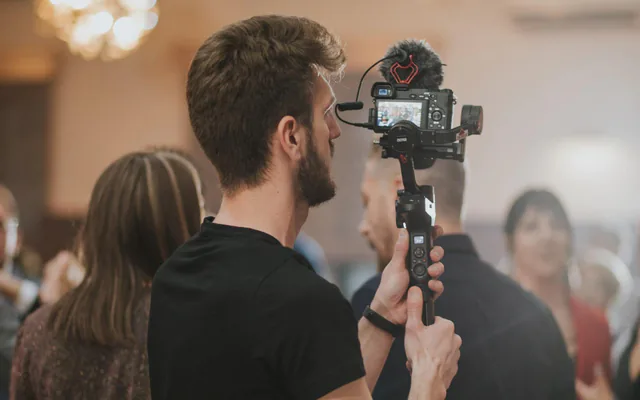
A successful launch produces content: photos of the product in use, portraits of the executives, a short video of the reveal, guests’ reactions. Brief the photographer and videographer with a shot list of must-haves, and ask for a selection delivered within 48 hours so you can publish while the topic is still hot. A live photo wall, which displays images on screen during the evening, also encourages guests to share.
What mistakes should you avoid?
- A badly timed date: check the calendar of trade fairs in your sector and local events before setting yours.
- A poorly managed embargo: if the press is invited, state in black and white the date and time when publication is allowed.
- Speeches that are too long: the product should appear within the first twenty minutes.
- An untested demonstration: rehearse it in the venue, using the venue’s wifi and power supply.
- No way of collecting contacts: plan a form, a QR code or a dedicated person.
- No measure of success: decide before the event what you will measure (media coverage, contacts, orders).
What goes on the launch-week checklist?
- A full rehearsal of the reveal, with the technical set-up, the day before or that morning.
- Press kit ready: press release, high-definition visuals, technical data sheet.
- List of guests and confirmations at the welcome desk.
- Shot list given to the photographer and the videographer.
- Demonstration products in duplicate, charged and tested.
- Contact collection form or QR code checked.
To evaluate your operation afterwards, our article on measuring an event’s success suggests simple indicators to track.
Questions we are often asked
How do you organise a product launch event?
First define the audience (press, clients, distributors or employees) and the single message you want them to remember. Then choose a suitable format (press morning, client evening, public activation) and a venue consistent with the product’s image, and stage the moment of the reveal. Plan photo and video from the design stage: they are what will keep the launch alive after the event.
Which event format should you choose to launch a new product?
For the press, a short morning with a demonstration and interviews; for clients or distributors, an evening with a staged reveal and hands-on time with the product; for the general public, an activation in a busy location; for internal teams, a convention or a seminar. Each audience has its own timings and expectations.
Go further
- Stage, screens and video
- Photographer and videographer
- Sound and lighting
- Product launch
- Trade fair stand entertainment
- Conventions and conferences
- LED show and cold spark machines
- Photo booth and PicShot entertainment
- Marseille
- La Ciotat
- Guide: How to organise the opening of your premises
- Guide: How much does a photographer for a corporate event cost?
- All frequently asked questions
More advice
Let’s talk about your launch
Describe your product, your audience and your date: we will suggest a format, the staging and a quote within 48 hours.